C&I All-in-one Hybrid ESS (Low Voltage) BES-H30LX100: 30 kW, 100 kWh, Three-Phase 208/220 V
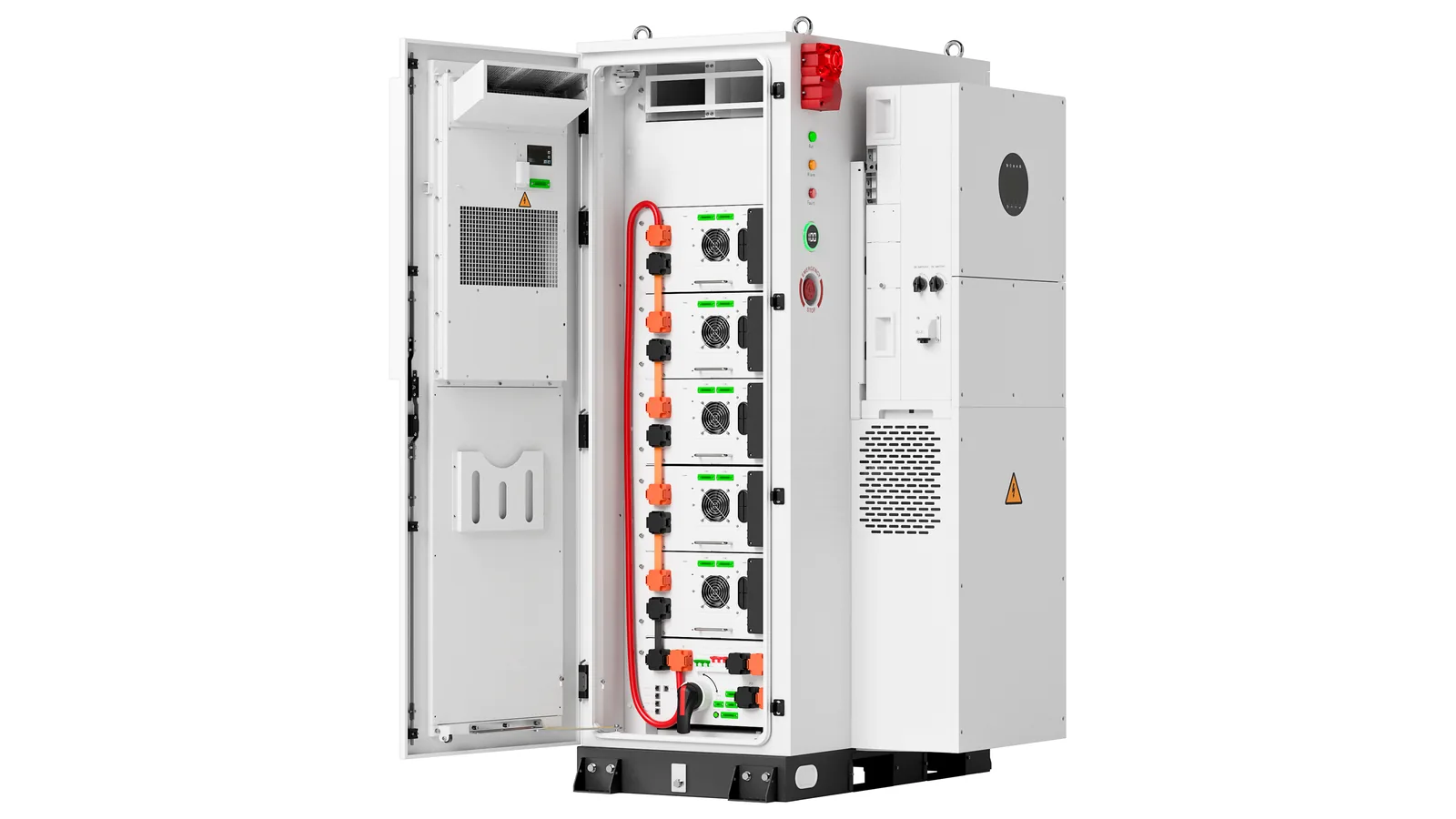
The BES-H30LX100 is one of four cabinets built for Latin American low-voltage grids: 30 kW AC from a three-phase 120/208 V or 127/220 V supply, 100 kWh of LFP storage in five packs, and three MPPT inputs for the roof array. It is the same platform as the global C&I All-in-one Hybrid ESS, configured for 60 Hz and for the 220 V line common across the region.
100 kWh is one peak event for most commercial sites: at the 30 kW rating the cabinet discharges for over three hours, which covers a demand peak or a short outage rather than a full production shift.
What the Code Tells You
BES-H30LX100 reads as a set of decisions: BES is the cabinet family, H the platform, 30 the AC rating in kW, L the low-voltage line and X100 the installed energy in kWh. The other three models differ only in the last two numbers: X100 and X120 add one or two pack slots, and H35 swaps in the 35 kW inverter.
Nothing else changes between them. The enclosure, the three MPPT inputs and the 208/220 V output are shared, and the pack is the range's 314 Ah LFP cell in 1P20S. Each slot adds 20 kWh and about 140 kg.
The Inverter Behind the Rating
The 30 kW models use the HP3-30KL1 inverter: three-phase 3W+N+PE, wired for 120/208 V and 127/220 V, 50 or 60 Hz, 98.4% peak efficiency. Its rated AC current is 83.3 A at 208 V and 78.7 A at 220 V, and that is the number that sizes the cable and the breaker, not the 30 kW.
At the higher line voltage the same 30 kW draws less current, so a site on 127/220 V needs a smaller feed for identical output. That is the only electrical difference between the two grid standards this cabinet supports.
Three MPPT Inputs, 150-850 V
Each tracker accepts up to 45 A, with a 55 A short-circuit rating, and the input window runs from 150 to 850 V, so an array is planned by string voltage first and by current per tracker second. The 60 kWp ceiling for this cabinet is the practical limit for 30 kW of AC output on a 208/220 V line: a larger array is clipped at midday.
A DC-coupled array keeps the whole chain in one cabinet, which is why the low-voltage line does not need a separate PV inverter at the meter.
C&I All-in-one Hybrid ESS (Low Voltage) BES-H30LX100 in Numbers
| Item | BES-H30LX100 |
|---|---|
| Rated AC power | 30 kW |
| Installed energy | 100 kWh |
| Packs | 5 x 20 kWh, 314 Ah LFP, 1P20S |
| Grid | 3W+N+PE, 120/208 V and 127/220 V |
| Frequency | 50 / 60 Hz |
| Inverter | HP3-30KL1 |
| Max efficiency | 98.4% |
| Max AC current | 83.3 A at 208 V, 78.7 A at 220 V |
| MPPT inputs | 3, 150-850 V, up to 45 A each (55 A short-circuit) |
| Array size | 60 kWp |
| Mass | 1165 kg |
Usable energy is quoted by the project, not by the model code: depth of discharge, backup reserve and warranty terms are set per site.
When 100 kWh Is the Right Size
- One demand peak of two to three hours in the afternoon, when the fixed charge is set by the monthly 15-minute maximum.
- An outage of two to four hours on essential loads: offices, cold room controls, lighting, the server rack.
- A PV self-consumption case where the evening load is 30 to 60 kWh and the array is 60 kWp.
Two peaks a day, or a load that runs all night, is where this model stops: X120 adds a third pack slot for that case.
Questions about this model
Can the BES-H30LX100 run on 208 V single-phase?
No. The cabinet is three-phase 3W+N+PE and takes 120/208 V or 127/220 V between phases. A single-phase site needs a different product, not a different setting.
Is this the same cabinet as the 60 kW global model?
Same platform, different output stage and grid configuration: 30 kW on 208/220 V instead of 60 kW on 400 V. A 400 V cabinet cannot be re-configured in the field to 208/220 V, which is why this line exists as separate models.
How long does 100 kWh last at full load?
Over three hours at the 30 kW rating, longer at the average load, which is usually half the peak. The number that matters for sizing is the usable energy the project reserves, not the nameplate.
Name the Country and the Voltage
208 V and 220 V are different cable schedules, not two names for one grid. Send the site voltage, the transformer size and the load profile, and the answer comes back with the model and the single-line diagram.